
Maynard’s Proposed Lighting Bylaw
For the past year, Green Maynard has been working on a Lighting Bylaw which we hope to present at either the Spring or Fall Town meeting. We have been working with experts from MA Dark Skies which is part of the International Dark Sky community. We will be proposing a bylaw recommended by MA Dark Skies and similar to other cities and towns in MA. Some towns such as Acton, Concord, and Boxborough have some form of Lighting Bylaw. Other towns, such as Becket, Gloucester, Nantucket, Northampton, and Pelham have fully implemented the MA Dark Sky recommendations. Other towns such as Chelmsford have proposals similar to Maynard which they are preparing for upcoming town meetings. There are also 2 statewide law proposals currently in committee.
Why Have a Lighting Bylaw?
There are several reasons towns would want a Lighting Bylaw:
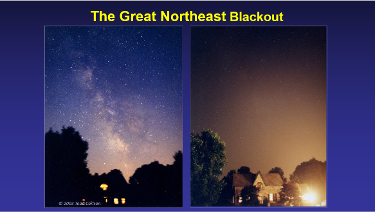
Compare the night sky on a regular night vs. during the Great Northeast Blackout in 2003
Enjoyment of the night sky
Anyone who wanted to see the Northern Lights earlier this year knows how difficult it is to find dark skies in Maynard. Likewise, if you have been in a darker environment, you have probably noticed how much more of the night sky is visible with the lights. If you were around in 2003, you might remember the spectacular night sky. The picture below shows the sky during the 2003 blackout and the same location today.
Environmental Consequences
One thing we don’t often think of is the effect of light pollution on wildlife. The reduced population of fireflies has been attributed to light pollution. Gardens have 62% fewer visits by nocturnal pollinator in the presence of artificial light. Some estimates suggest that one third of insects attracted to stationary artificial light sources die before morning either trough exhaustion or predation. 80% of migrating birds to do at night and many or most use stars to navigate. Artificial light contributes to an estimated 600 million bird deaths annually from building collisions in the US alone.
Human Consequences
For humans, artificial light interferes with melatonin levels causing sleep disorders. There is some research suggesting that breast cancer growth rates are proportional to exposure to light intensity
Visual Impairment (glare, trespass)
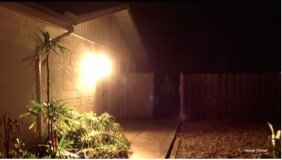
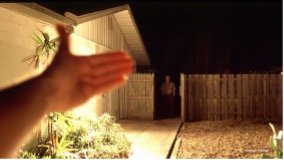
We can all relate to the glare from the lights of an oncoming car. Likewise, stationary lights create glare which actually make it more difficult to see. The two photos below are a good example. In the 1st photo, you can see an open gate at the far end of the building, but not much else. In the 1nd photo, with the glare removed, you can clearly see a person standing on the other side of the opening.
To preserve the scenic and aesthetic qualities of the town
One of the aspects of Maynard we all enjoy is the welcoming community vibe. Appropriate lighting can contribute to this welcoming vibe. The photos below, taken by Michael Ford of Maynard, demonstrate this. Would you rather have lighting like the Assabet Co-op Market and the Firehouse—or like the glare in the parking lot behind Town Hall and the Police station?
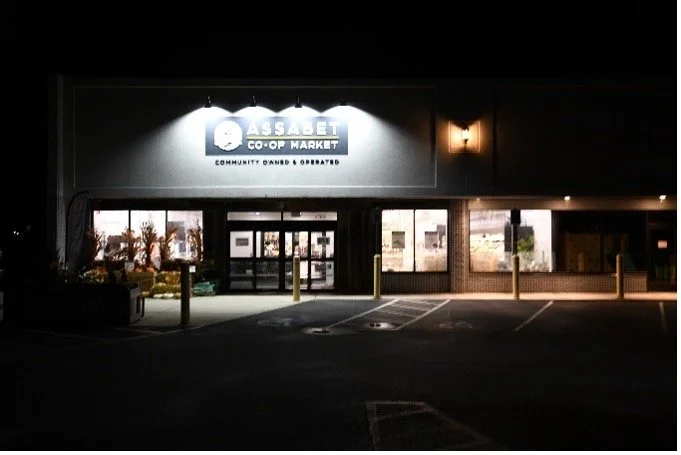
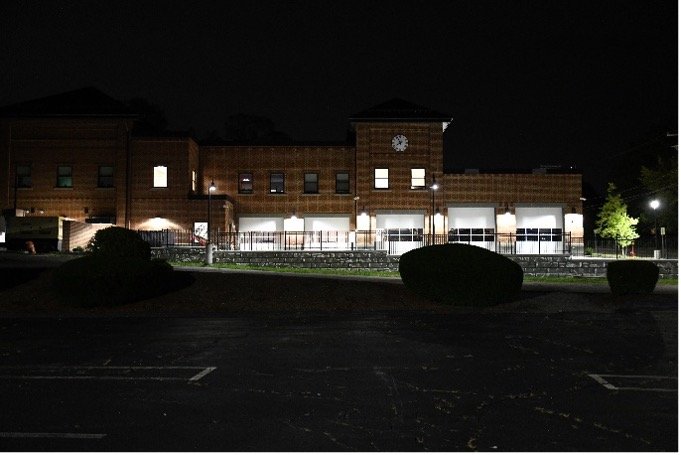
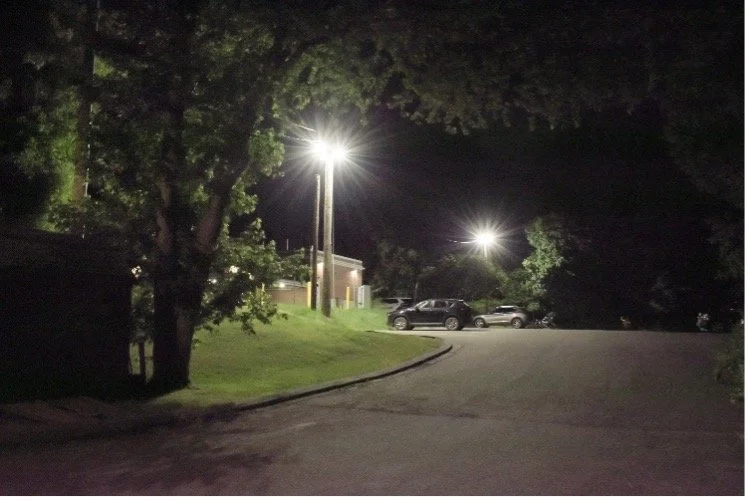
Left and middle: The Assabet Co-op and Fire Station have lighting that minimizes light pollution. Right: Behind Town Hall the the Police Station.
To conserve energy and resources
The energy conservation impact is probably obvious. Why would we want to pay more for lighting that has all the detrimental effects mentioned previously in the article.
Lighting Fundamentals
There are five principles for governing lighting
Useful: All light should have a clear purpose
Targeted: Light should be directed only to where needed
Low Levels: Light should be no brighter than necessary
Controlled: Light should be used only when it is useful
Color: Use warmer color lights where possible
The following graphic is a good illustration of these principles:
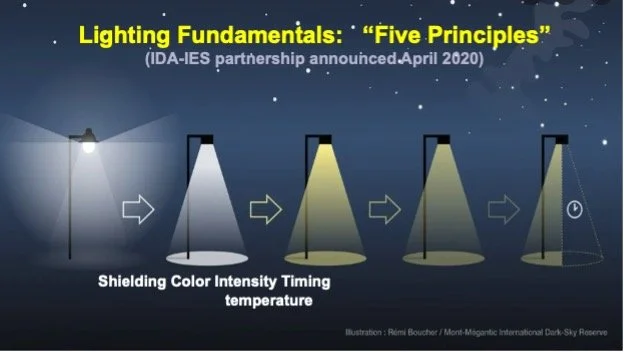
Lighting fundamentals 5 principles
What Can I do?
If you are interested in reducing light pollution on your property, there are several things you can do:
1. Turn lights off when not needed
2. Shield external lights
3. Use dimmable bulbs
4. Use “warm light” bulbs (2200K or less – marked on packaging)
5. Use low-output bulbs (600 lumens or less – marked on packaging)
6. Install timers and/or motion detectors
Read the Proposed Bylaw Presented to the Select Board
How Can I Learn More?
MA DarkSky and International DarkSky have plenty of useful information on their websites.
Look for events in and around Maynard during International Dark Sky week, April 13–20, 2026.